Start with the addresses and cargo requirements
Record where the cargo will actually be collected and where it will be handed over to the consignee. Specify when it is ready, the acceptable delivery window, the number of packages, weight, dimensions, packaging and equipment needs. Flag temperature control, stacking restrictions or special acceptance requirements before requesting a quote.
Ask for a breakdown by leg, including border crossings, terminals and places where the mode changes. The corridor name helps you choose a direction. A shipment request still needs exact acceptance and release points and named parties responsible for each handover.
Entry from China: choose the crossing and terminal
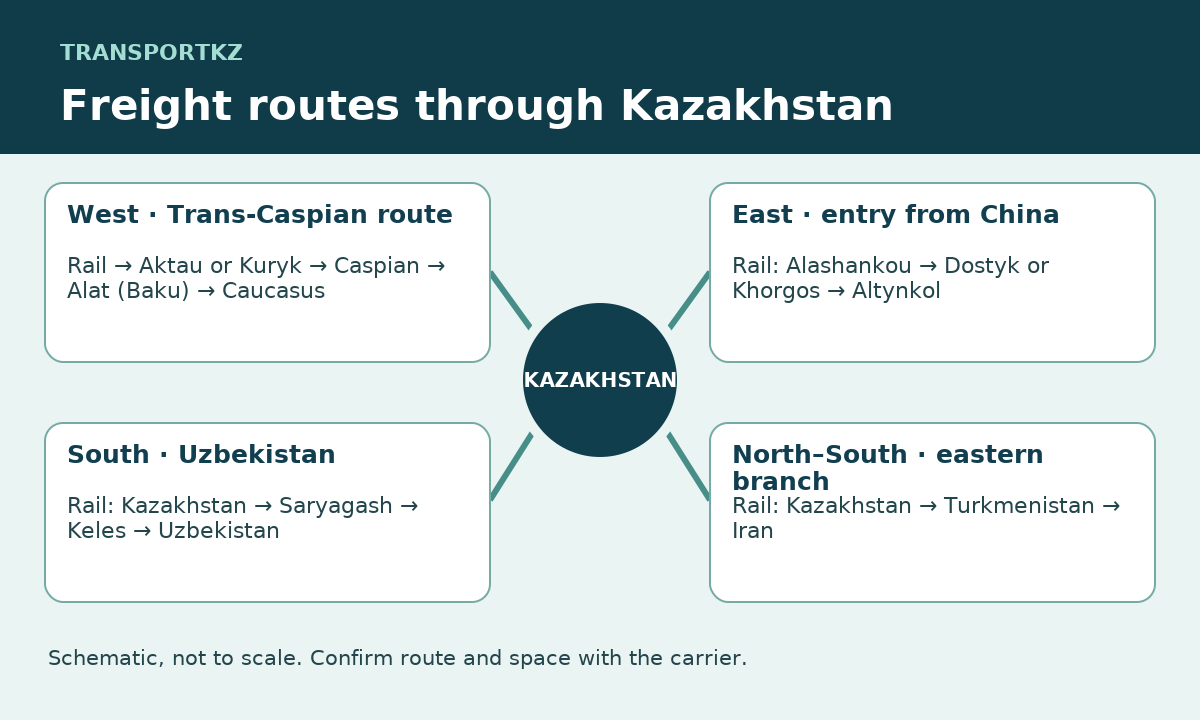
Rail entry from China can use the Alashankou–Dostyk or Khorgos–Altynkol pair. In an April 2026 statement, Kazakhstan identifies the Khorgos–Eastern Gate dry port at Altynkol as existing infrastructure. The CAREC table also includes Khorgos in the context of a road route. Ask which station, road crossing or terminal the carrier means.
For each option, ask where the cargo or container is transferred between the rail systems and who handles the border operations. If it continues within Kazakhstan or to a neighboring country, confirm the release station and the cost of onward transport to the final address.
Westbound: rail and the Caspian on the TITR
The Trans-Caspian International Transport Route (TITR, or Middle Corridor) combines overland legs with a sea crossing. For a shipment via Kazakhstan, check whether Aktau or Kuryk is proposed and confirm the port on the Azerbaijani side, such as Alat (Port of Baku). After Azerbaijan and Georgia, routes can continue on the Baku–Tbilisi–Kars railway through Türkiye or via Georgia’s Black Sea ports. Compare the options against the final address and the connection offered.
Ask for the port terminal, who books the sea leg, what handling is included, what waiting allowance applies and where storage fees begin. If the sailing moves, establish in advance who will notify the parties and how the onward transport changes.
Southbound: Uzbekistan and the separate North–South branch
One rail option for Uzbekistan is Saryagash–Keles, identified in the CAREC list. For trucking, ask for a named freight crossing and confirm it accepts the proposed vehicle and cargo. A matching district or border-hub name does not establish whether the road route is available.
For freight moving to Iran through Turkmenistan, consider the eastern branch of the international North–South Transport Corridor separately. Kazakhstan’s foreign ministry refers to the Kazakhstan–Turkmenistan–Iran railway. Check transit, handover and insurance terms with the carrier and broker for each country on the proposed route. The corridor’s geography cannot confirm acceptance of a particular shipment.
Compare rail, road and multimodal options on the same terms
For rail, ask separately for delivery to the station, terminal handling and delivery from the destination station. For road, check whether one truck runs the whole route or the cargo is handed over. For a route with a sea leg, identify who is responsible at each connection and ask what happens if it is delayed.
Compare quotes from the same pickup address to the same release address. Record included charges, exclusions, currency, quote validity and the start and end events used to calculate delivery time. If one quote ends at a terminal, add the final leg as a separate line.
Six questions to ask the carrier
- 1. Where is the cargo accepted and released, which crossings and terminals are included, and where does the mode change?
- 2. Are acceptance of this shipment, suitable equipment and space on every leg confirmed?
- 3. Who handles transshipment, border formalities and transfer of documents at each connection?
- 4. What does the rate cover? How are storage, waiting and additional operations charged?
- 5. What starts the delivery clock, and who reports changes or a missed connection?
- 6. What backup route is possible, and who must approve its price, timing and terms?
Decide once the key terms are confirmed
Set aside options without confirmed cargo acceptance or an essential connection. From those left, choose a route that meets your delivery window and has a clear total cost and allocation of responsibility. Keep a backup option based on the same shipment details. Confirm the rate, schedule and availability for the specific shipment.