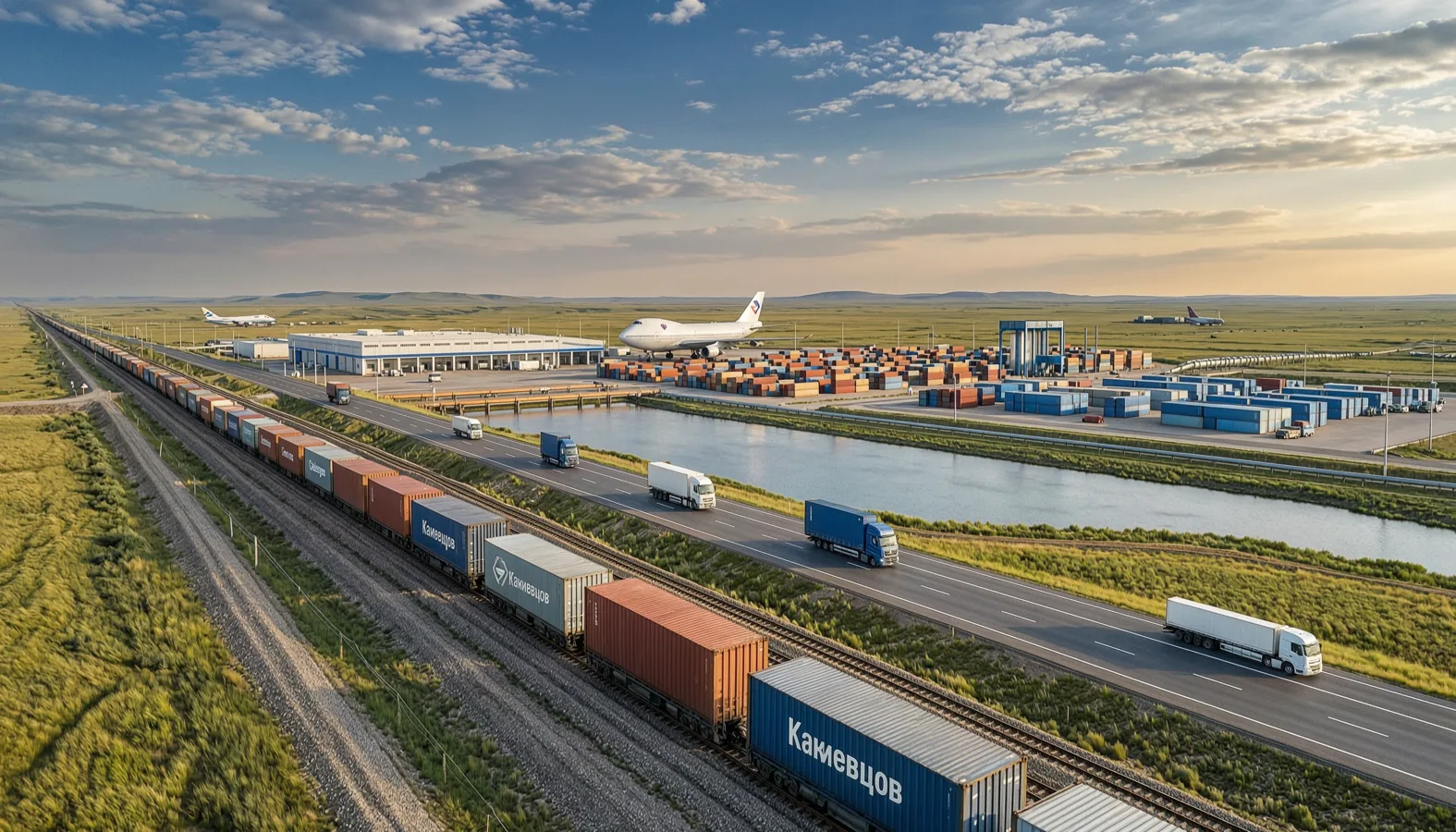
What changed in the statistics
Kazakhstan’s Bureau of National Statistics (BNS) reports that 796.2 million tonnes of freight were carried in January–October 2026, up 0.9% on the same months of 2025. Freight transport work rose 0.3% to 430.3 billion tonne-kilometres. The first measure counts freight mass. The second takes both mass and distance into account.
Rail carried 279.2 million tonnes, down 1.1%, while rail tonne-kilometres rose 0.8%. For road transport, the BNS reports a 4.8% increase in tonnes and a 5.9% increase in tonne-kilometres. These results compare modes within their respective statistical coverage. They do not establish that the same shipments moved from rail to road.
Why a change in volume does not explain its cause
A national total combines different goods and routes. Different combinations of demand, commodity mix and haul lengths can produce the same trend. Even if a turning point coincides with new external restrictions, the timing cannot establish how much those restrictions contributed on their own.
Start with a measurable question. For example, did the share of a transport mode change for one commodity group on one route? Select comparable months, check the reporting scope and compare several periods if possible. Account for seasonality and documented changes in demand or available capacity. If the necessary breakdown is missing, keep the proposed explanation as a hypothesis.
Keep transport figures and trade figures separate
Tonnes, tonne-kilometres and monetary value answer different questions. Value can rise because of prices or commodity mix while mass stays the same. Tonne-kilometres do not identify who purchased the goods or how they are used. When comparing sources, check the definitions, units and reporting periods.
A working note can separate the observation, a possible explanation and the evidence needed to test it. For example, rising tonne-kilometres are an observation from the official release. A change in commodity mix is a possible explanation that needs a breakdown by goods. To assess the legality of an individual transaction, check its documents and the applicable rules.
What to check in the transaction documents
Use reliable documents and current rules in the applicable jurisdictions to check the goods, parties, destination and end use. Where EU restrictions apply, the European Commission publishes general guidance on checking business partners, goods and transactions. For a decision on a specific case, contact the competent authority or a qualified professional.
Keep the sources, review date, documents and agreed decision. When the information is incomplete or inconsistent, pause approval until the discrepancy is clarified. Use transport statistics to describe trends and frame questions. Decisions about a shipment depend on verified circumstances and the requirements that apply to it.