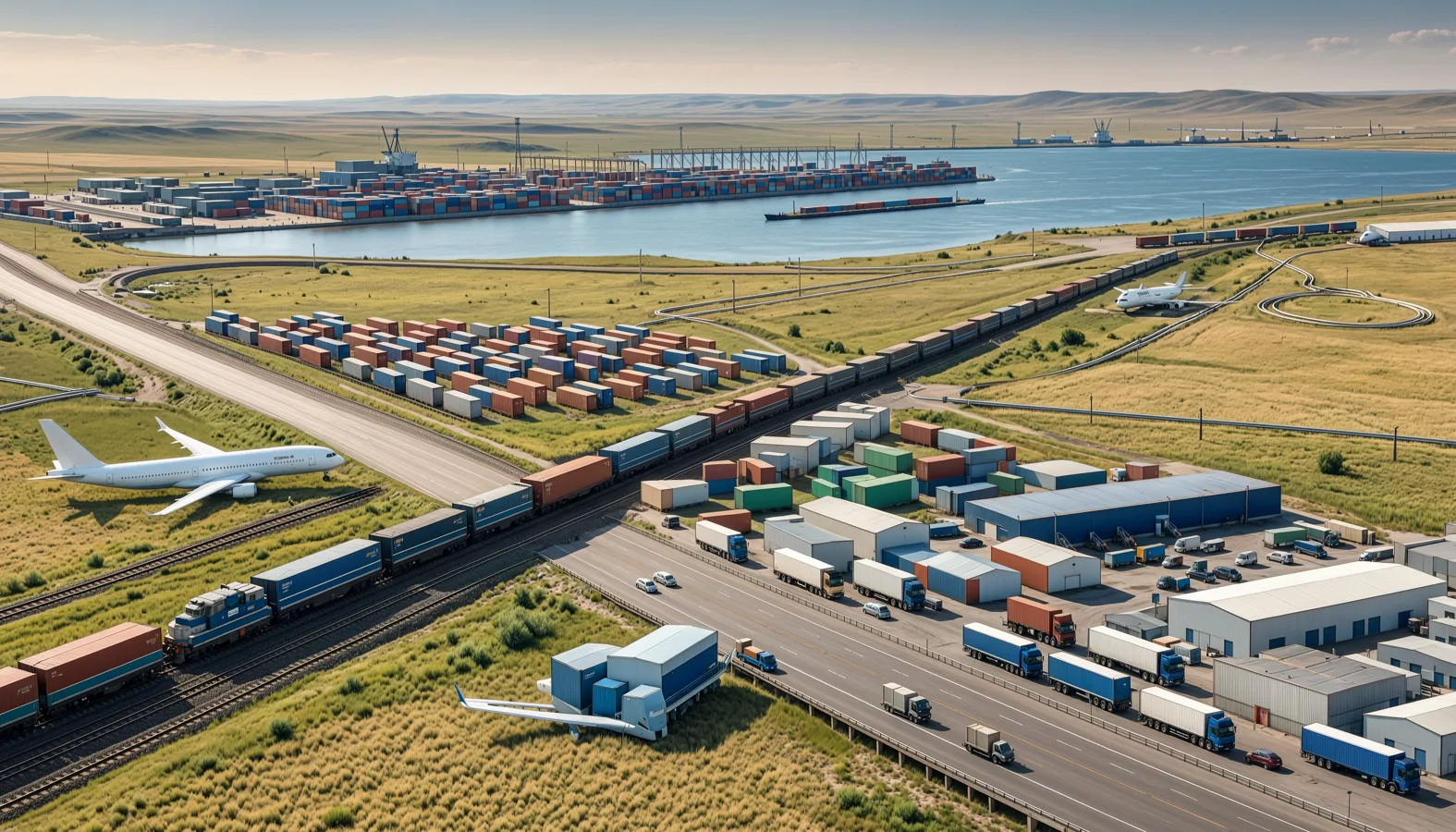
The Dostyk–Moiynty second track is in use
Traffic on the second track of the Dostyk–Moiynty section began on 30 September 2025. Kazakhstan’s Ministry of Transport puts the project length at 836 km. In its 2025 investment summary, Kazakhstan Temir Zholy (KTZ) lists the second track among the assets commissioned for permanent operation.
In an update on 6 October 2025, KTZ reported early operating results. By then, 206 freight trains had passed through the section, 101 of them on the new track. The count shows that the infrastructure was in use in the first days after opening. Assessing line capacity requires observations over a longer period, a breakdown by direction and information about operating restrictions. Traffic conditions can change as the track stabilises, as KTZ also noted in its October update.
Moiynty–Kyzylzhar and the projected route saving
The Moiynty–Kyzylzhar line is designed as a shorter route for freight. In May 2026, Kazakhstan’s Ministry of Transport estimated that opening the line would shorten the haul by 149 km and relieve traffic on the Moiynty–Zharyk section. In September, KTZ announced that the main track had been joined and that construction continued. A government resolution dated 9 November 2026 added the construction project to a list proposed for financing through non-government borrowing backed by state guarantees.
Include a shipment on the new line in an operating plan once both commissioning and the availability of the specific service are confirmed. For a preliminary estimate, record the projected distance, scheduled running time and expected time at stations separately. The shorter distance is one input. The end-to-end transit time also depends on the timetable and how long it takes to handle the train.
Why rolling stock and stations also matter
A double-track section provides more options for handling trains travelling in opposite directions. Using those options requires available receiving and departure tracks at stations as well as locomotives and wagons available to the carrier. Maintenance on an adjacent section can add time waiting for station entry. KTZ reported buying 149 locomotives and 2,323 freight wagons in 2025. For an individual shipment, confirm whether there is an appropriate wagon or flatcar at the loading point.
What to ask about your shipment
Ask the carrier for the route, the receiving station, the next confirmed departure date and rolling stock availability. Ask it to identify sections with temporary restrictions and stations where the estimate includes a wait for handling. For recurring shipments, record when the cargo was accepted, when the train left and when it arrived at the destination station. For comparable consignments, these intervals show where transit times vary and where you need a time buffer.