What changes at the crossing
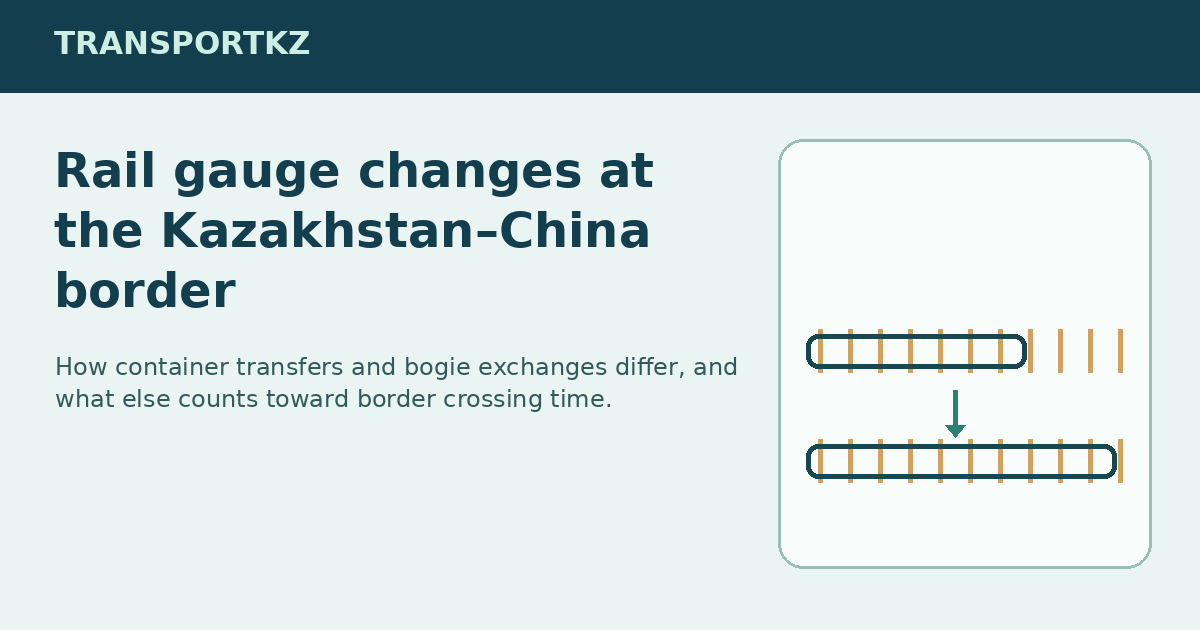
China’s railway uses 1,435 mm track, while Kazakhstan’s network uses 1,520 mm track. The networks meet at the Dostyk–Alashankou and Altynkol–Khorgos rail crossings. The difference determines how freight passes to the next leg. When planning a shipment, identify the handling facility, the transfer method and the point at which the carrier records handover.
How a container is transferred
The terminal typically lifts the container off a flat wagon of one gauge and places it on a flat wagon of the other gauge. The cargo stays inside. The container may go into temporary storage while waiting for the outbound wagon. The forwarder checks the container type and gross weight, compatibility with the wagon’s container fittings and the equipment needed for the job. Heavy or out-of-gauge loads require a separate handling arrangement.
When bogies are exchanged
A bogie exchange is a wagon operation. The body stays intact while the running gear is exchanged for bogies compatible with the other gauge. Availability depends on wagon design, railway requirements and station equipment. For a container shipment, check exactly what service the operator has quoted. The same container may continue on a different wagon.
What counts toward border crossing time
CAREC’s methodology tracks transfer due to a change of gauge as one border crossing activity. The overall interval can also include waiting for acceptance, checks, waiting for wagons and getting the train ready to depart. CAREC’s 2023 Kazakhstan report describes gauge change and paperwork difficulties at both crossings. Those were observations from a specific period. When booking, request an estimate for your direction and date and ask what event starts the clock. If your itinerary includes both sides of the border, check whether the estimate covers both stations.
What to send in advance
Include the container and seal numbers, container type and gross weight, border crossing, origin station and destination station. Ask who verifies paperwork, reports completion of the transfer and confirms acceptance on the next leg. Digital status messages make reconciliation easier when everyone uses the same definition. Track a completed transfer and a confirmed departure separately, for instance. Ask about storage terms if the outbound wagon is delayed.