One port, different projects
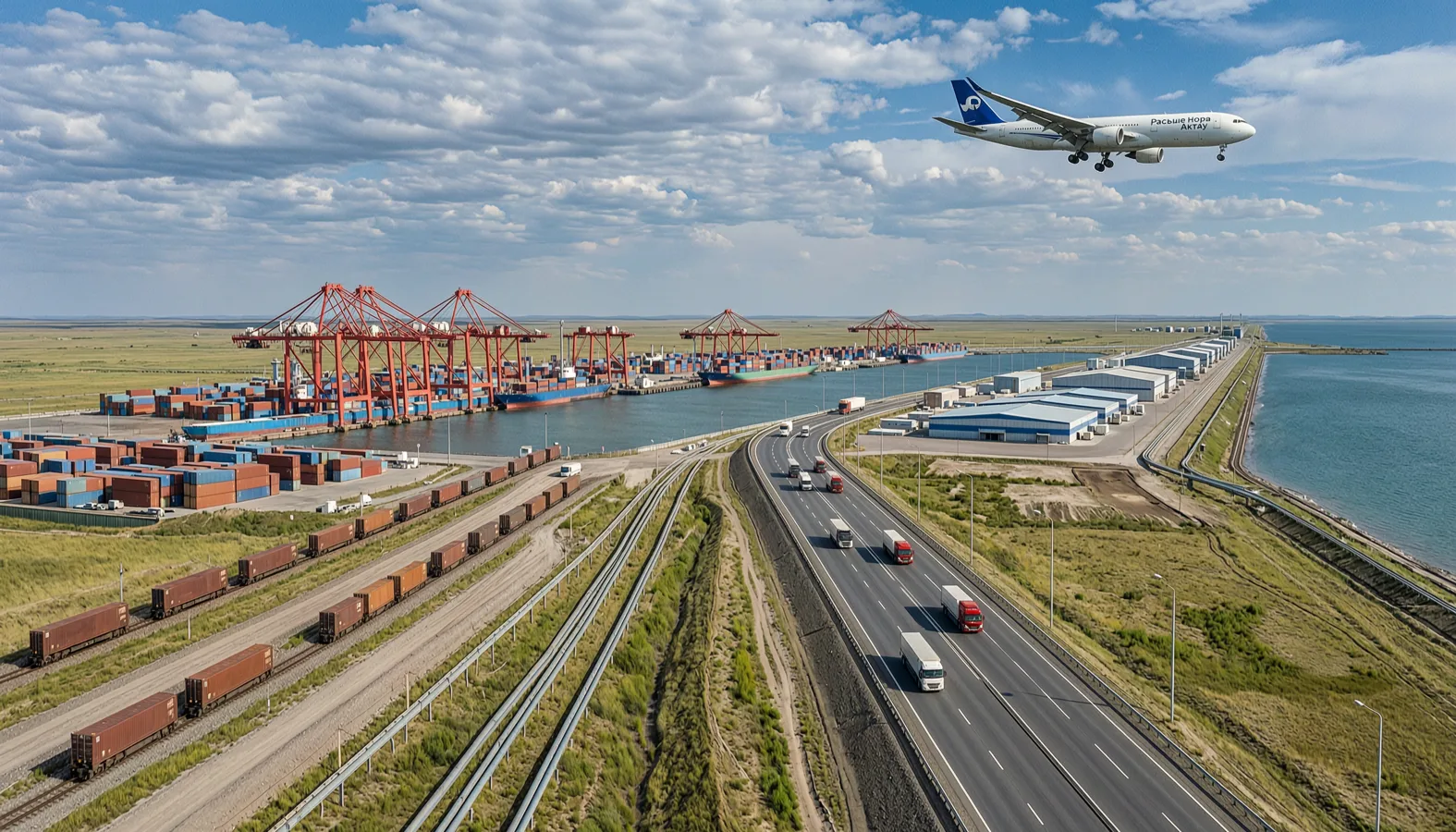
Infrastructure at Aktau is expanding in several ways. The container hub receives and stores boxes and transfers them between rail and sea. Dredging addresses navigation conditions. The berth, terminal tracks and harbour waters serve different stages of a shipment. A project update can inform your decision on that stage. For the whole journey, check the arrangements with both the terminal and carrier.
What is known about the hub’s operations
On 6 October 2026, Kazakhstan’s Ministry of Trade and Integration reported that the first container train was received on 14 July 2026. It recorded 233 containers, or 444 TEU, received by that report date. The Ministry of Transport gives the hub’s design capacity as 240,000 TEU per year. The first arrivals show that the facility has handled cargo. The design figure describes how much it is intended to handle as the project develops. They measure different things over different periods.
What dredging changes
On 5 October 2026, Kazakhstan’s rail and water transport committee reported that the main works had started and gave a target harbour depth of 6–7 metres after dredging. Harbour depth and allowable vessel draft are different measurements. Ask the carrier for restrictions at the berth and on the approaches on the date of the call, and confirm the vessel’s loading for that sailing.
How to assess expansion and investment
The Ministry of Transport described construction of the hub as a joint project between Kazakhstan and China. Assess project progress by checking which access tracks, storage areas, handling equipment and waterfront facilities are ready. One section can offer additional services before the hub reaches its design operating level. For a container shipment on the Middle Corridor, the connection still depends on vessel availability and acceptance at the destination port.
What to ask for on your shipping date
Get acceptance for your container on the rail leg, an available terminal slot and a confirmed Caspian sailing. Agree where the sea carrier takes over, who will report actual loading, and what storage terms apply if the sailing changes. If a quote gives a single through rate, ask for the terminal operations, port charges and the release leg on the opposite shore so you can compare like-for-like services. Record the confirmation date and its validity in your booking.