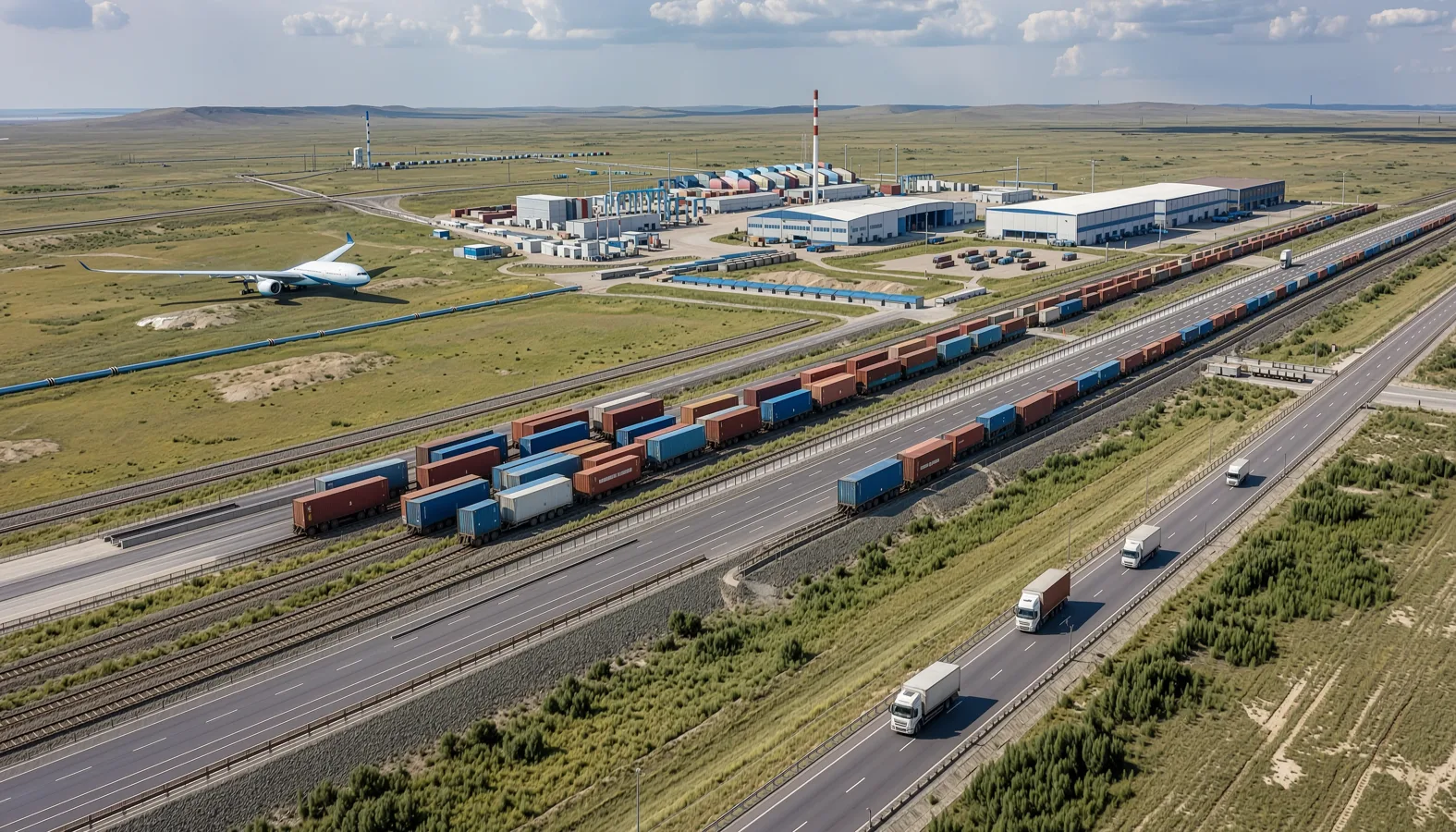
Where freight moves and where delays arise
The Trans-Caspian International Transport Route links Central Asia to the South Caucasus across the Caspian Sea. A container from China may transfer to Kazakhstan’s railway, pass through Aktau or Kuryk, cross to Azerbaijan and continue through Georgia. The next leg can run by rail through Türkiye or via a Black Sea port. The exact chain depends on the destination and the carrier’s service.
How to read the tonnage figures
Kazakhstan’s Ministry of Trade and Integration reported 4.5 million tonnes of actual freight on the TITR in 2024. This is a historical figure for the route. A Ministry of Transport update on 3 November 2026 gave another figure: the Caspian Bridge project aims for 8 million tonnes per year, with a later target of 10–12 million. These are ferry project targets. When comparing figures, check the year, the area covered, the direction and the unit. TEU measures container volume, while tonnes measure mass.
Why port capacity alone cannot settle the question
Throughput depends on rail, terminal and vessel slots lining up. A terminal can admit containers to its yard, and onward movement can still wait for space on the vessel or the availability of rail wagons on the other shore. At the OSCE meeting in November 2026, Kazakhstan identified rail modernization and the expansion of Aktau and Kuryk as priorities. The Port of Aktau also raised the issue of falling Caspian water levels, which matters when confirming a particular sailing.
Rail ferries, feeders and transfers
A rail ferry can carry wagons when the vessel and shore facilities are compatible. A container feeder takes boxes lifted from the quay and transfers them onward at the discharge port. In either case, ask what is confirmed across the Caspian, where the shipment is expected on the other shore, and whether space exists on the next land leg. Request slots on each link for the same shipment and date.
What to request before shipping
Confirm the ports, the route beyond the Caspian, the receiving window, the deadline for confirming loading and which terminal services the quote covers. Ask what happens if the sailing is moved and what storage terms apply. Agree where the transit-time clock starts and ends. The Middle Corridor also handles regional trade, which the World Bank includes in its development assessment. For an individual transit shipment, check space through an actual booking.