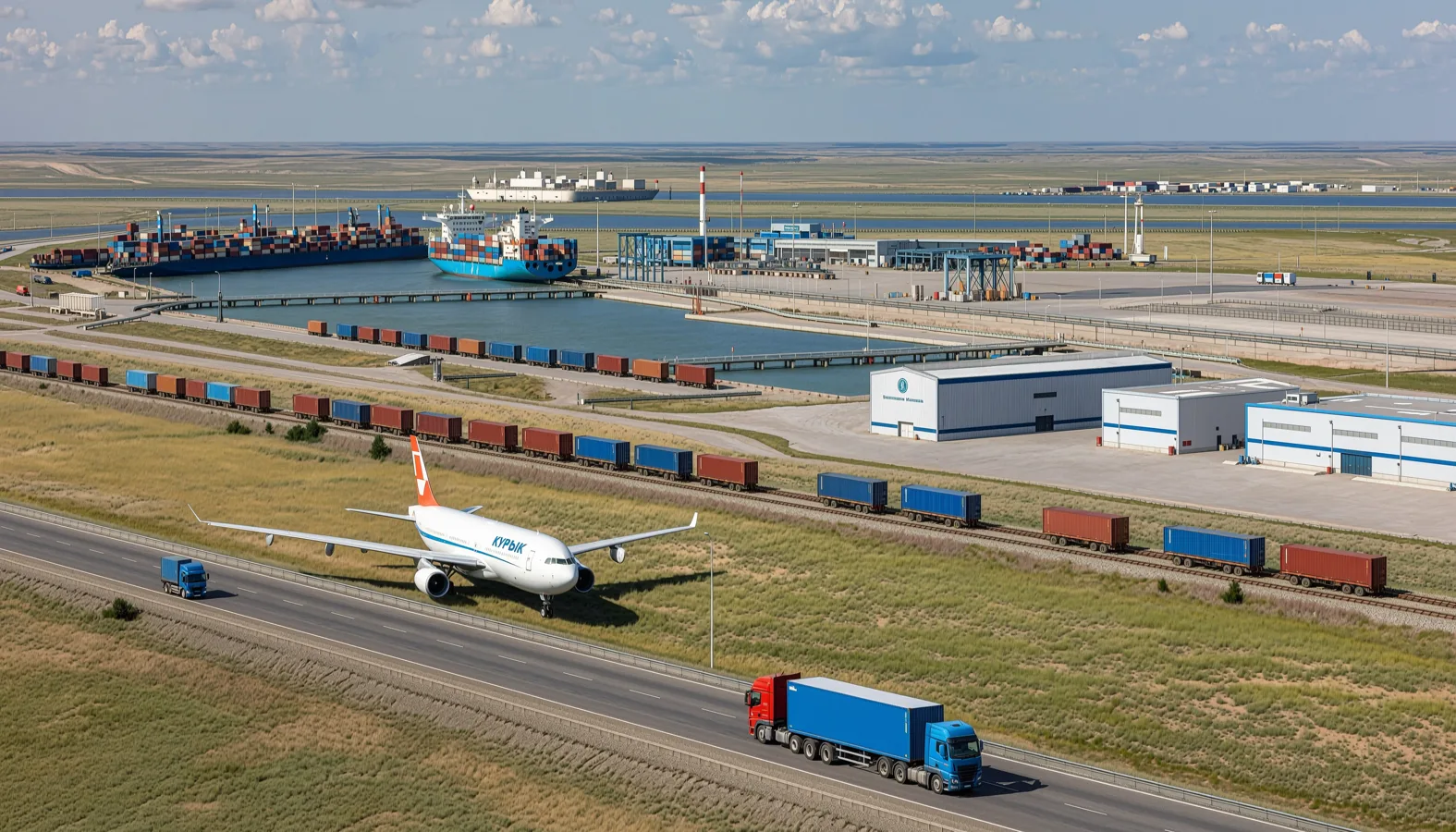
Start with the handling method
Around the Caspian, the place name locates a port on a map. A shipment quote needs the operator, berth and way the cargo will move. A crane can lift a container, a rail wagon can roll onto a matching ferry, and grain and oil require specialized equipment. Start by choosing the handling method and agreeing on it with operators on both shores.
Aktau: several kinds of cargo
Aktau International Sea Commercial Port lists dry cargo, crude oil and petroleum products among its services. Its infrastructure page identifies oil, metal, grain and cargo carried on rail ferries. Choose a berth with the carrier and confirm how the goods reach it by rail or road. For a container, specify its type and gross weight, the transfer method and the release point on the opposite shore.
Kuryk: ferry operations
Kuryk lies south of Aktau. Its operator describes a natural bay and a ferry complex equipped for rail wagon roll-on and roll-off. Check whether the service accepts your particular wagon or other rolling unit, who confirms it is included in loading, and where it will be handed over on the other shore. Allow for the ferry wait and any applicable storage in your cost estimate.
Bautino: a separate cargo district
The Port of Aktau describes Bautino as its separate cargo district in the village of the same name. Bautino lists industrial equipment, construction materials and other cargo. For a project shipment, confirm each package’s allowable dimensions and weight, the berth equipment and whether the chosen vessel can call. When a quote names Aktau as the operator, ask where the cargo will actually be handled.
Vessel draft, berth window and space on board
Dredging and conditions on the approaches affect allowable draft and vessel choice. In October 2026, Kazakhstan’s rail and water transport committee reported that the main dredging works had begun at Aktau. For a specific date, check the applicable restrictions and get the berth window confirmed. Before booking, verify the handling method, the sailing and the handover on the opposite shore. Record port charges, sea freight and storage terms for both shores separately. For a multimodal shipment, agree in advance on who documents the handover and when the next carrier takes responsibility.